

Patellar Tendinosis Treatments in Kansas City
Chiropractic Patellar Tendinosis Treatment in Kansas City.
You don’t have to be a jumper to experience “jumper’s knee.” Everyone has heard the term quadriceps or quads before, and if you’re an athlete you know how important this muscle is for power, stability, and global movement. What most are not aware of, however, is the intimate relationship this muscle group has to the knee cap, or patella. When all four muscles that make up the quadriceps come together, they form something called the quadriceps tendon to attach to the top of the knee. From there, this tendon actually continues down the tibia, shin bone, as a ligament known as the patellar ligament. Whenever this structure becomes irritated or inflamed, we give it a fancy name. Initially, it is referred to as patellar tendinitis, but in long term cases it is called patellar tendinosis.
Symptoms of
Patellar Tendinosis
Pain and Symptoms may include:
Sharp pain over knee when walking up or down stairs
Pain at the knee during activities such as running, biking, walking, jumping
Pain when getting up after sitting for extended periods of time
Swelling at the knee joint is possible, especially after the knee has been been or at rest. Symptoms usually decrease when the individual is at rest.
Treatments for Patellar Tendinosis
Treatment for patellar tendinosis in Kansas City from F.I.T. Muscle & Joint Clinic includes soft tissue therapy to the surrounding area, as well as retraining and normalizing the muscular balance of the lower extremity. Make sure the muscles above the knee and below the knee are properly stabilizing is important for immediate relief of pain and prevention of the problem returning. Commonly, pain at the knee is secondary to a muscular imbalance happening elsewhere in the body, primarily the ankle or hip.
Our Treatment Process
F.I.T. Muscle & Joint Clinic will work to identify where the knee pain is primarily stemming from in order to properly strategize a healing plan for the area. Our clinicians are trained in multiple soft tissue (or manual) techniques to target the cause of pain and areas of inflammation and provide the best chiropractic patellar tendinosis treatment in Kansas City.
These techniques work locally to help with irritation caused by either an acute injury to the tissue or chronic inflammation from old injuries or repetitive trauma. Then, by functionally retraining how the body utilizes the muscles in this region with different exercises, our local treatments for patellar tendinosis can have a global response: the tendons, ligaments and other surrounding soft tissue.
Possible Treatments for Patellar Tendinosis
For other treatment options, check out physical therapy for patellar tendinosis.

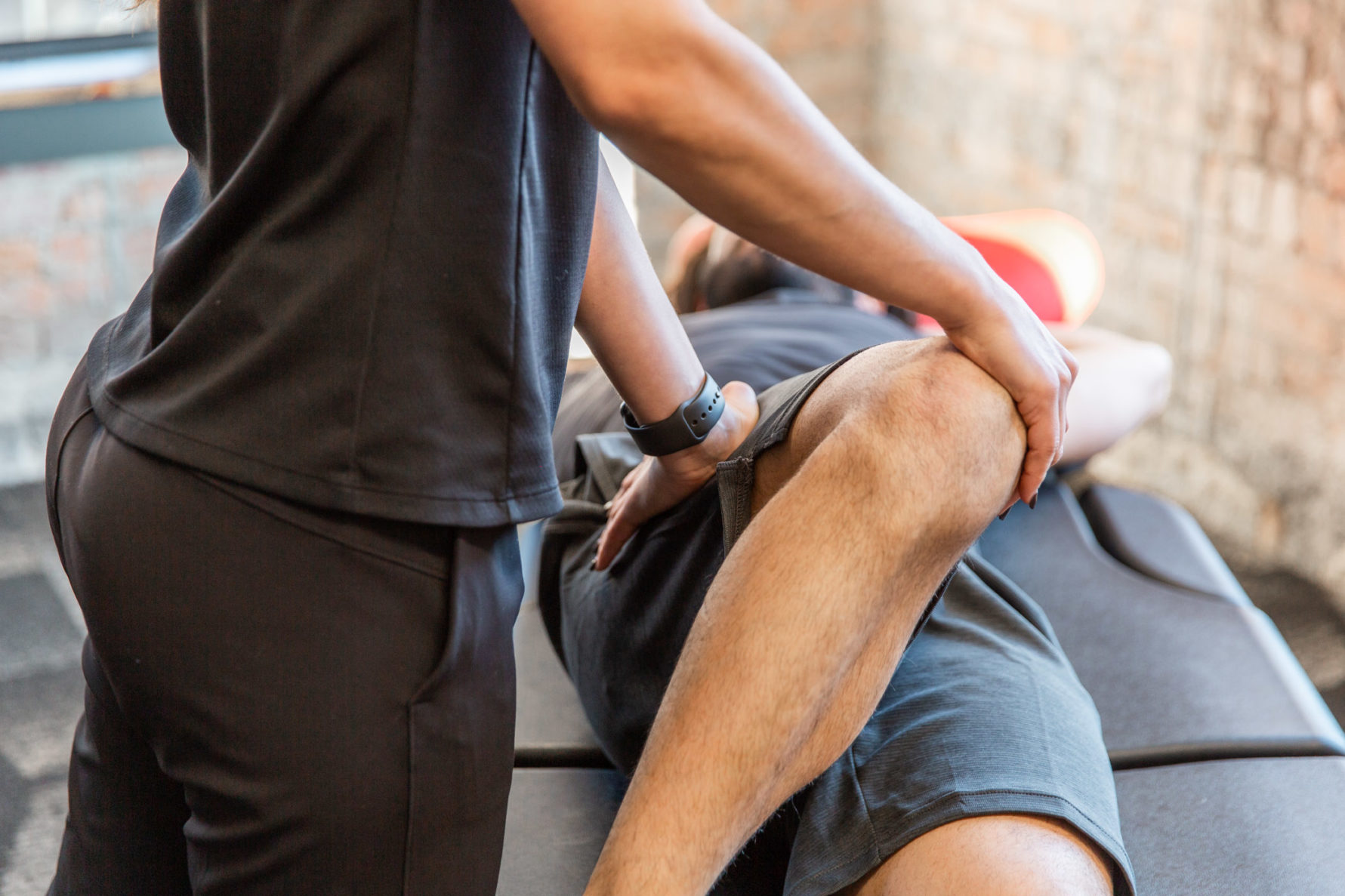
Active Release Techniques
Our Active Release Technique (A.R.T.) in Kansas City is the leading soft tissue therapy to treat muscles, tendons, ligaments, fascia, and nerves.
Learn More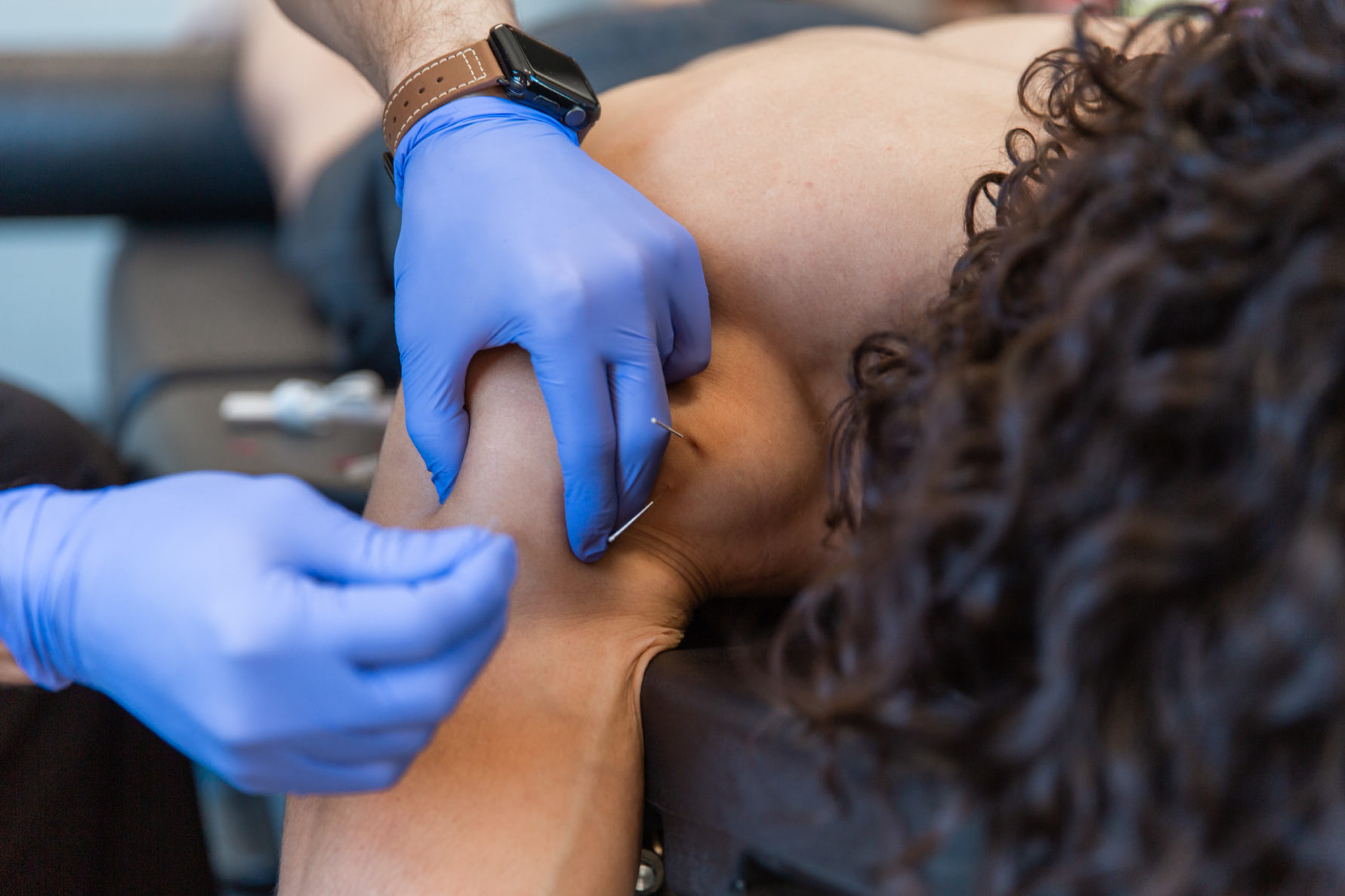
Dry Needling
Dry Needling is the process of using a thin needle inserted into a trigger point to relieve a contraction within a muscle.
Learn More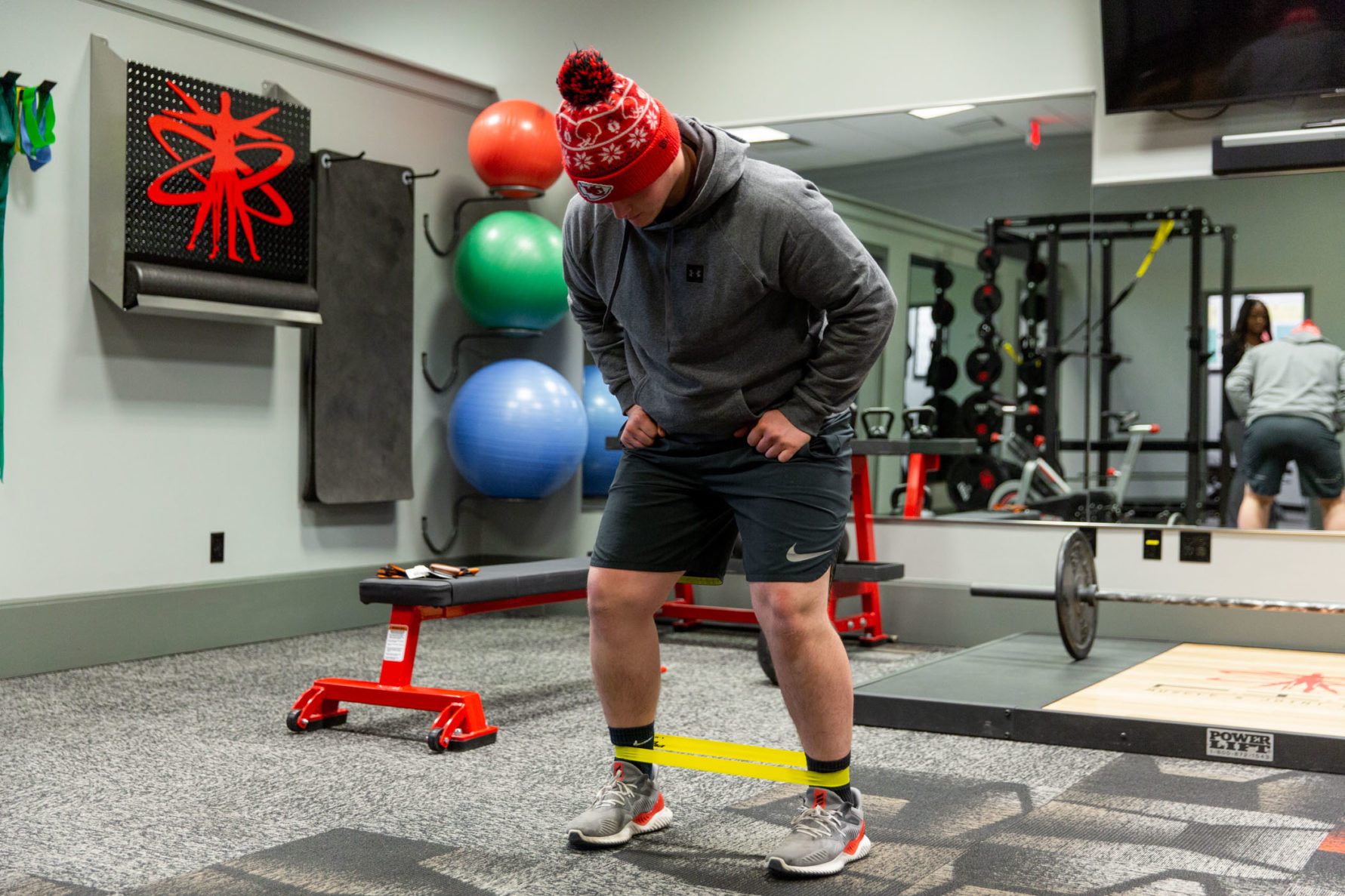
Chiropractic Rehabilitation Exercises
Our Chiropractic Rehabilitation favors quality of the exercise movement over quantity of reps as the key to restoring proper function.
Learn MoreFrequently Asked Questions
How long should I expect my patellar tendonitis recovery time to take?
The recovery time for patellar tendonitis varies by individual. The average tissue takes a minimum of 4 to 6 weeks to heal, but tendons can take up to a few months to heal. The chiropractic patellar tendinosis treatments we offer should shorten recovery time.
Patellar tendinosis treatments in Kansas City at F.I.T. are typically structured to progress step by step—starting with reducing irritation, then rebuilding strength and tolerance so you can return to higher-level activity. That's how we provide short-term and long-term relief and ensure it holds up when you get back to doing what you enjoy.
What is patellar tendinosis vs tendonitis?
The symptoms of patellar tendinosis and patellar tendonitis are very similar, but the location and cause of the injury is where the main difference lies.
Is there such thing as a patellar tendon strap?
Yes, it's a band that rests below the knee. We can provide taping that functions similarly, or we can refer you somewhere to purchase a patellar tendon strap.
Do I need to stop running or working out?
Completely stopping activity can sometimes make things feel worse, especially if the tendon loses its ability to handle load. The goal is usually to adjust—not eliminate—what you’re doing. That might mean temporarily reducing volume, avoiding certain movements like deep knee bending or jumping, or changing how you train.
Our providers work to understand what’s irritating the tendon and what it can still tolerate. With the right approach, most people can stay active in some way while improving their symptoms, instead of feeling like they have to hit pause on living an active life.
Can patellar tendinosis heal without surgical intervention?
In most cases, yes. Surgery is rarely the first step unless symptoms have been persistent for a long time and haven’t responded to conservative care.
Patellar tendinosis treatment is more about how the tendon is handles load than recovering from a single injury. That means improving strength, movement patterns, and how force is distributed through the knee can make a significant difference. Patellar tendinosis treatments in Kansas City typically focus on gradually restoring the tendon’s tolerance to load so it can handle activity again without flaring up. Progress takes consistency, but many people improve without needing invasive options.
Why does this keep coming back?
The pain might calm down for a while, then return as soon as activity picks back up. That usually means the underlying issue hasn’t been fully addressed. It could be how your hips, ankles, or core are contributing to the stress on the knee, or how quickly training intensity increased. If those patterns stay the same, the tendon keeps getting overloaded in the same way. Long-term improvement comes from changing how the body handles movement, not just settling the symptoms temporarily.
Tell Us about your pain
Take a couple of minutes to tell us about your symptoms and pain areas. Prefer to chat over the phone? Call us for a free phone consultation.
Visit your local F.I.T. Chiropractor
Meet the team at any of our 10 locations: Lee’s Summit, Crossroads, Leawood, Paola, Blue Valley, Olathe, Kansas City, Liberty, Overland Park & Shawnee.